Staying with the Problem
A letter to the studio, on AI.
For twenty years, the studio never had a style. We never looked for one. We didn’t want anyone to look at our work from across the room and say “that’s theirs.” We’d rather they said “that’s right,” which is a harder compliment and a much rarer one.
What we had was a process. A way of arriving at things. Tested, broken, fixed and tested again over two decades. We trusted it more than any result. Results come and go. The way of getting there stays.
Then artificial intelligence arrived. It didn’t knock. It never does.
Our first reaction was suspicion. If a machine can produce a hundred directions before we’ve finished reading the brief, what’s left of the method? The questions, the detours, the constraints we used to gather slowly weren’t a way of doing the work. They were the work.
It would be very convenient to say nothing changes. We’d love to say it. But when we look back at the projects we like most, we find, with some embarrassment, that many of our best decisions weren’t decisions at all. They were accidents. A wrong turn on the third day. A sketch that was headed for the bin and somehow wasn’t. A constraint that annoyed us for an entire week until it turned into the idea. None of that would have happened if we’d been quick. It happened because we were slow, and slowness forces you to live with a problem long enough for it to answer back.
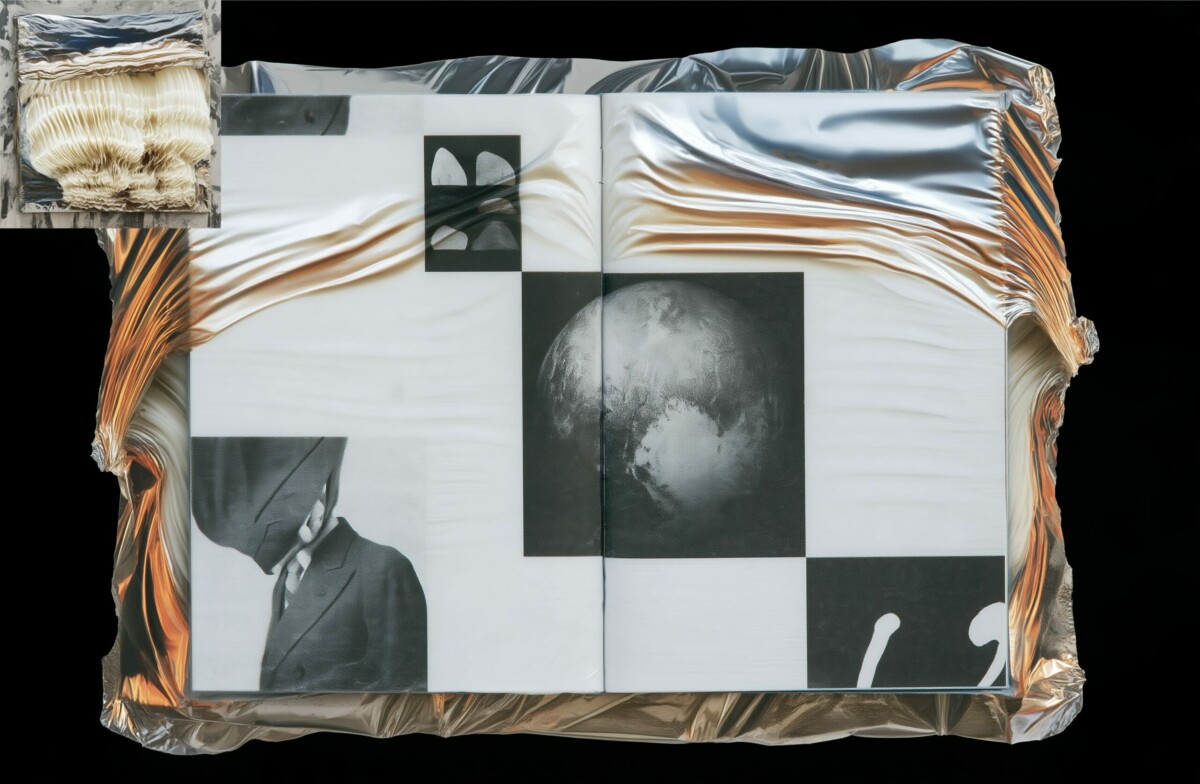
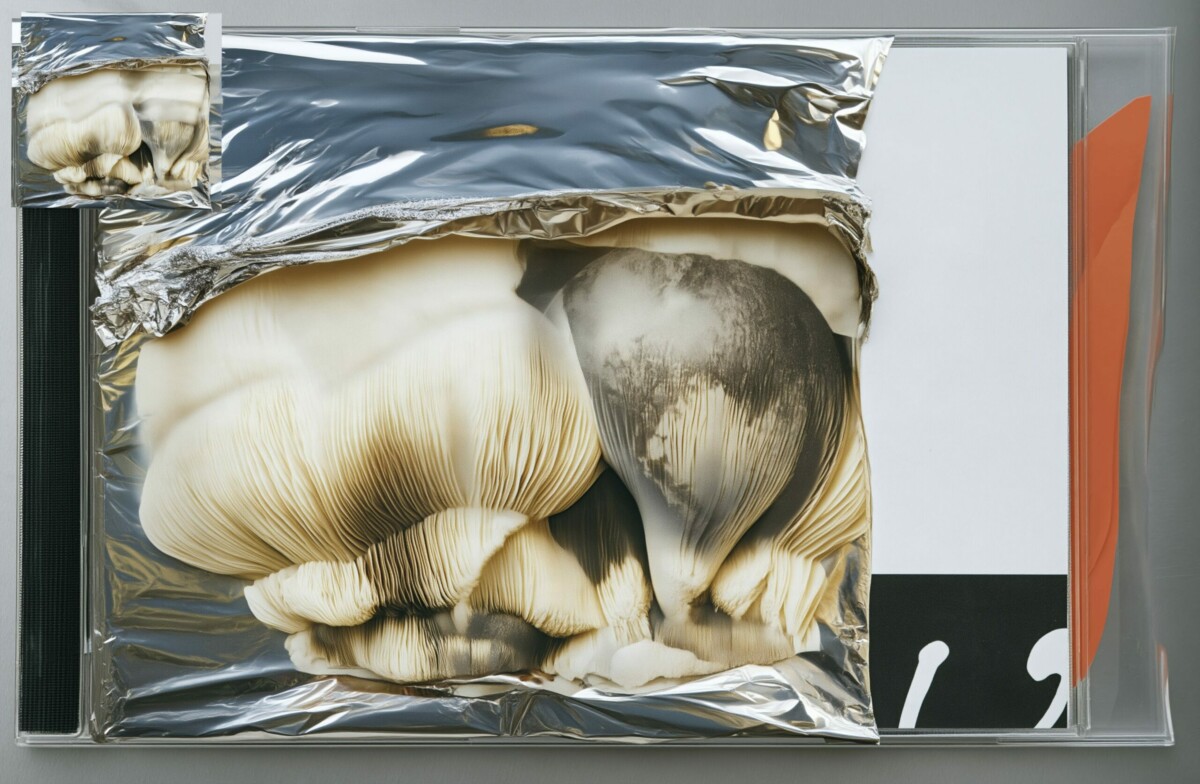
The machine folded a planet into a mushroom. It was a mistake. We kept it.
The machine doesn’t get things wrong like that. It gets things wrong in another way: fluently, neatly, with the confidence of something that has never spent three days stuck on a problem. Its mistakes are plausible and forgettable. Ours were crooked and memorable.
There’s also a quieter danger. When every morning starts with fifty finished-looking options on the table, the process can turn, without anyone noticing, into an exercise in choosing. Choosing is an art. Searching is another. And we don’t yet know what happens to a studio that searches less.
We don’t have a clean answer. We have one that works, which isn’t bad. We let the machine do what it’s good at: filling the first days with possibilities, far more than we could ever invent on our own. Then we do what we’ve always done with whatever lands on the table. We filter, we doubt, we take things apart, we put them back together and we decide what deserves to leave the studio. The machine works upstream. The twenty years work downstream.
It isn’t a perfect arrangement. What gets generated is very good for starting and very bad for finishing. The more complete something looks on day one, the harder it is to question. We’ve had to learn to distrust our own relief, which is one of the more exhausting kinds of distrust. And the mistakes haven’t gone away. They’ve moved. They now happen later, in what we decide to keep and in why we keep it. That’s where the method has to live up to its name.
Letting go of authorship was never the hard part. We never held on to it very tightly. The hard part is not knowing whether the discipline that worked on a blank page still works on a page that arrives half full, written in seconds by something else. We think it does. We’re still finding out.
For now, we’re doing what the process has always asked of us: staying with the problem longer than is comfortable. This one included. If the method is as good as we’ve believed for twenty years, it will swallow this tool the way it swallowed the others. If it isn’t, better to find out by using it than by protecting it.
Either way, the method has to prove itself again, now that it no longer sets the pace.